

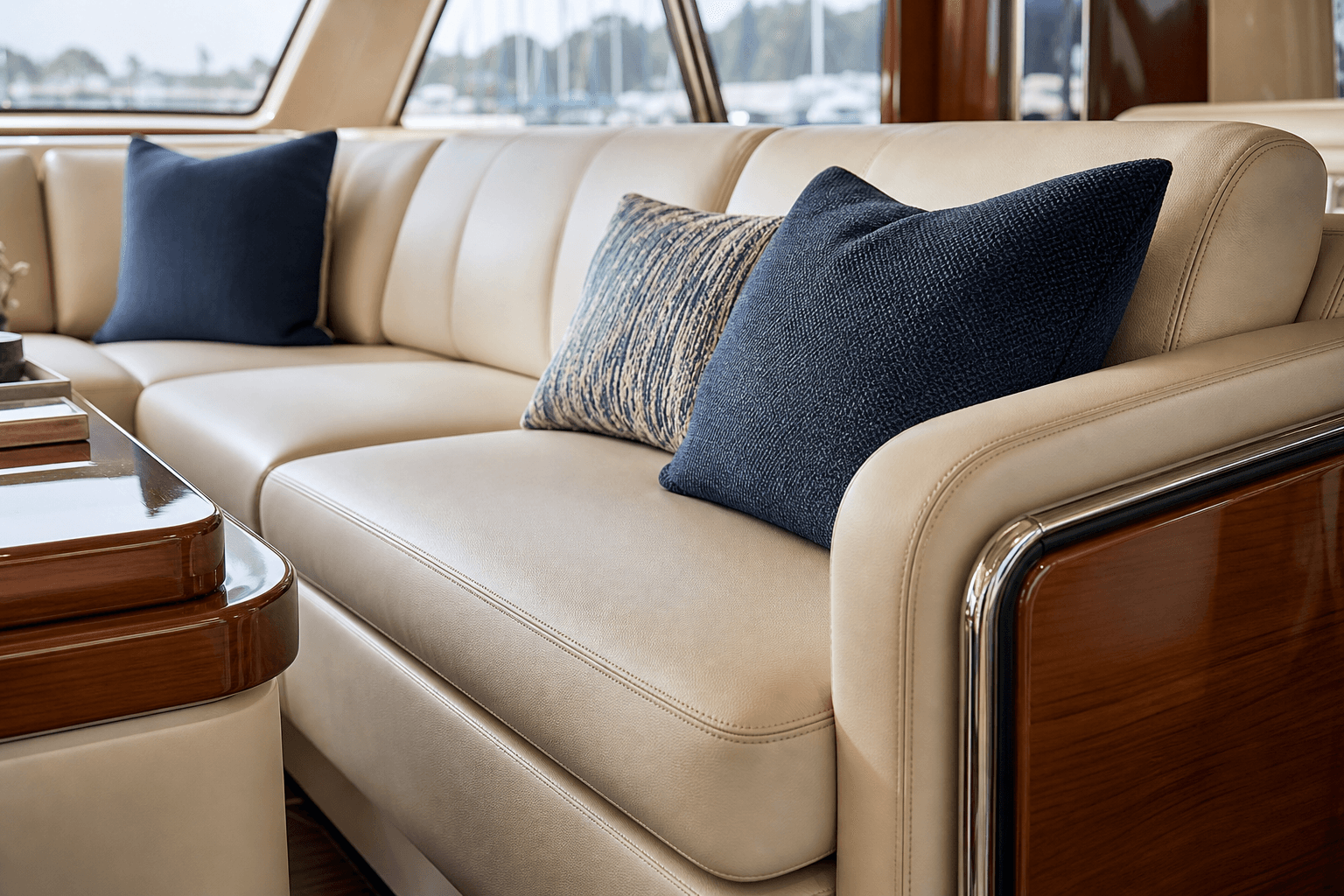
Marine interiors work harder than home interiors
Yacht upholstery and leather are exposed to a combination of conditions that most residential furniture never sees. Humidity, salt air, sunscreen, food, drinks, luggage, guest traffic, and compact cabin layouts all affect how seating and soft goods wear over time.
Even when a yacht salon looks orderly, soil can build up in seams, cushion edges, leather grain, armrests, and high-use seating areas. That buildup can change how the interior feels long before it becomes obvious in photos.
Clean upholstery is one of the fastest ways to make a yacht interior feel fresher, quieter, and better maintained.
Why yacht upholstery cleaning is different
Yacht interiors combine premium materials with limited ventilation and frequent guest use. The cleaning approach needs to respect both the material and the surrounding interior details.
Common onboard upholstery concerns include:
- Sunscreen and body oil transfer on cushions
- Moisture trapped in seams or dense textiles
- Light food and beverage residue
- Odors held in fabric or cushion structure
- Soil buildup on armrests and headrest areas
- Dye transfer from clothing or luggage
- Dust settling into stitching and textured surfaces
The goal is not aggressive cleaning. The goal is controlled cleaning that improves the surface while protecting the material.
Cleaning should match the material
Leather, fabric, vinyl-style surfaces, and marine-grade textiles should not be treated the same way. A good yacht upholstery cleaning process starts with identifying the material, checking condition, and choosing a method that cleans without over-wetting or overworking the surface.
Fabric upholstery
Fabric seating may need vacuuming, spot attention, controlled moisture, and careful drying. Over-wetting can create new problems in a marine environment, especially when airflow is limited.
Leather seating
Leather should be cleaned gently and conditioned when appropriate. The finish, age, and texture of the leather determine how much product and agitation should be used.
Marine vinyl-style surfaces
Some yacht interiors include vinyl-style or coated surfaces. These should be cleaned with compatible products that avoid residue, haze, or unnecessary shine.
Leather needs controlled care
Interior yacht leather benefits from gentle cleaning and conditioning when appropriate. The goal is to remove soil, improve feel, and reduce dryness without leaving a greasy finish or product residue.
Signs that yacht leather needs attention include:
- A dull or uneven appearance
- Sticky or oily feel on armrests
- Light cracking or dryness
- Darkened high-touch areas
- Visible residue around seams or stitching
Professional leather cleaning should leave the surface clean, natural, and comfortable. It should not make the leather look artificially glossy.
When to schedule upholstery and leather cleaning
Owners and captains often schedule upholstery and leather cleaning around specific vessel events:
- Before owner or guest arrival
- After busy weekends or onboard events
- Before listing, showing, or photography
- After charter-style guest turnover
- During monthly interior care
- After renovation or trade work creates dust
For active vessels, upholstery care should not wait until seating looks visibly dirty. A recurring schedule keeps soils from becoming harder to remove.
Upholstery care supports the whole cabin
Clean seating changes how the entire salon or cabin feels. It affects scent, comfort, visual presentation, and the way guests perceive the vessel's care level.
Upholstery and leather cleaning works especially well when paired with:
- Interior deep cleaning
- Carpet extraction
- Head and galley sanitation
- Interior wood and metal polishing
- Linen and towel service
- Drawer and accessory organization
Simple maintenance tips between professional cleanings
Between scheduled services, captains and owners can reduce buildup with a few simple habits:
- Remove spills quickly instead of letting them settle.
- Keep sunscreen and oily products away from seating when possible.
- Ventilate the interior after heavy use.
- Avoid harsh household cleaners on marine upholstery.
- Use soft cloths and material-appropriate care products.
- Track recurring spots so they can be addressed professionally.
The bottom line
Yacht upholstery cleaning and yacht leather cleaning are not cosmetic extras. They are part of protecting the comfort, presentation, and value of the vessel's interior. When seating, cushions, carpets, heads, and galleys are cared for together, the whole yacht feels more prepared for owners and guests.