

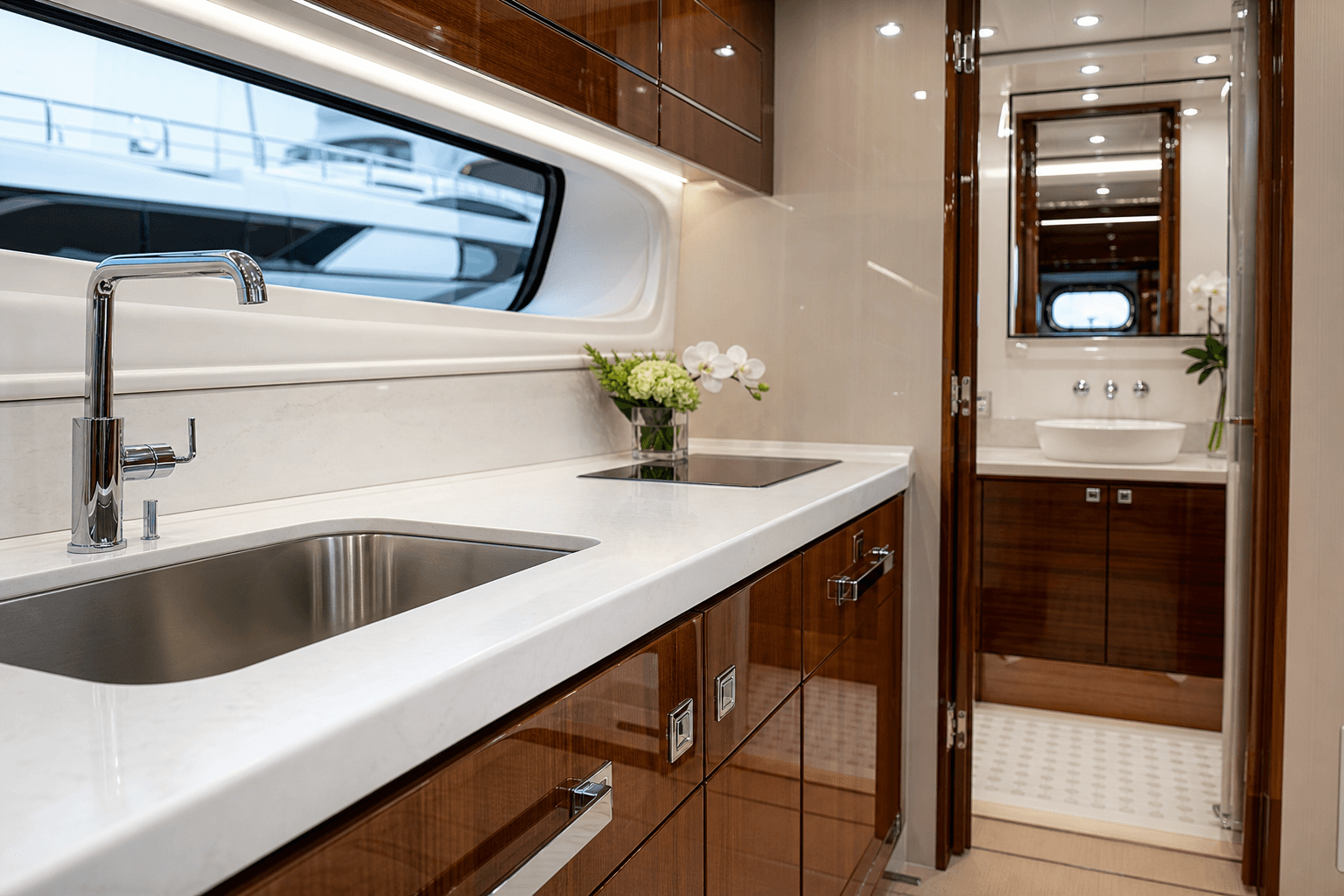
High-touch areas shape confidence onboard
Interior sanitizing is most important where hands naturally go. On a yacht, those surfaces are close together and used repeatedly by owners, guests, and crew. A clean interior should look refined, but it should also feel sanitary.
High-touch yacht interior surfaces include:
- Door handles and cabin pulls
- Stair rails and interior handrails
- Light switches and control touchpoints
- Galley appliance handles
- Cabinet and drawer pulls
- Head fixtures and faucet handles
- Tables, counters, and vanity surfaces
- Remote controls and shared accessories when included in the scope
Sanitizing is most effective when it follows proper cleaning. Soil should be removed before disinfecting products are applied.
Cleaning vs. sanitizing vs. disinfecting
These terms are often used together, but they do not mean the same thing.
Cleaning
Cleaning removes visible soil, oils, dust, residue, and debris from a surface. It is the first step because products work better on clean surfaces.
Sanitizing
Sanitizing reduces germs on surfaces to a safer level. It is useful for routine guest-ready interior care and high-touch areas.
Disinfecting
Disinfecting targets specific microorganisms on surfaces when used correctly. It usually requires product dwell time and surface compatibility.
Sanitation should follow cleaning
Disinfecting works best after visible soil has been removed. A surface that has dust, oils, fingerprints, galley residue, or product buildup should be cleaned first, then treated with an appropriate sanitizing or disinfecting step.
For yacht interiors, the process should be careful around:
- Leather and upholstery
- Glossy wood finishes
- Metal fixtures
- Stone counters
- Electronics and controls
- Glass and mirrors
The right product matters because luxury interior materials can be damaged by harsh or poorly matched cleaners.
Heads and galleys deserve extra attention
Heads, showers, sinks, counters, appliance faces, and galley prep areas carry a higher sanitation expectation. These spaces should be part of every pre-arrival and post-trip cleaning checklist.
Head sanitation focus areas
- Faucet handles
- Vanity counters
- Shower door handles
- Towel hardware
- Cabinet pulls
- Mirrors and touchpoints
Galley sanitation focus areas
- Sink and faucet
- Countertops
- Appliance handles
- Cooktop surfaces
- Drawer pulls
- Utensil storage areas
When to schedule yacht sanitizing service
For managed yachts, sanitation can be booked before owner arrival, after guest departure, after service work, or as part of a recurring interior care plan.
Useful scheduling moments include:
- Before owner or guest boarding
- After a trip or onboard event
- After charter-style turnover
- After contractors or service technicians leave the vessel
- During monthly interior maintenance
- Before photography, showing, or inspection
What a professional sanitizing checklist should include
A strong yacht sanitizing checklist should be specific enough that important surfaces are not missed.
- Clean first, then sanitize.
- Focus on high-touch surfaces.
- Treat heads and galleys as priority zones.
- Use material-compatible products.
- Avoid overspray around electronics and delicate finishes.
- Confirm the vessel smells clean, not heavily perfumed.
- Finish with a walkthrough from the guest perspective.
Why scent matters
A luxury yacht interior should not smell like strong chemicals. Cleanliness should feel fresh and controlled. Heavy fragrance can make guests wonder what is being covered up, while harsh disinfectant odors can make the space feel clinical instead of refined.
The best result is a balanced interior: clean surfaces, sanitized touchpoints, fresh heads and galleys, and no overwhelming scent.
Final takeaway
Yacht sanitizing service is not just a health-related add-on. It is part of the confidence owners and guests feel when they step into a cabin, use a head, sit in the salon, or prepare food in the galley. When sanitation is built into interior cleaning, the vessel feels more polished and more prepared.