

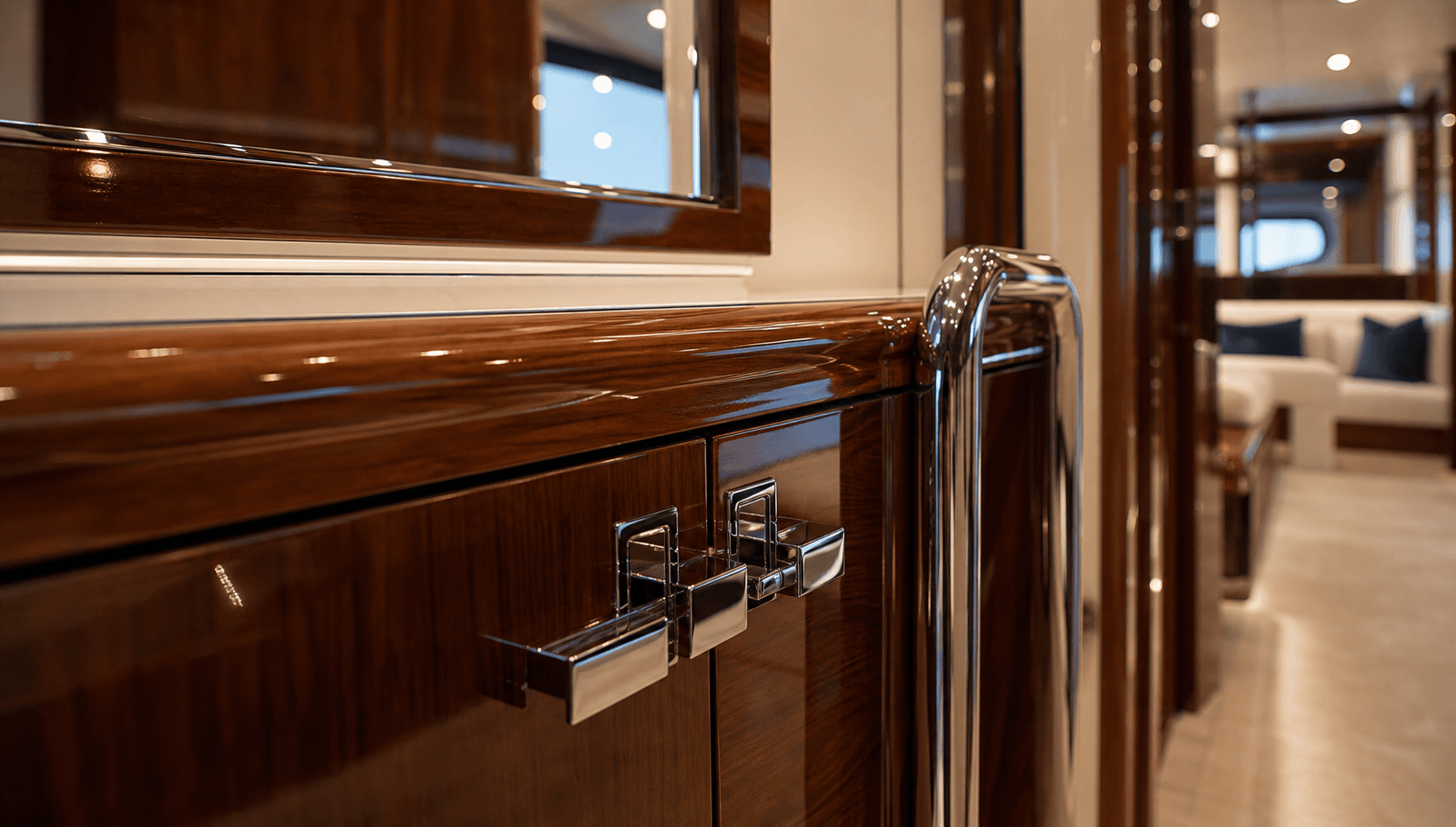
Polished details make interiors feel maintained
Yacht interiors are full of surfaces guests touch and notice: handles, rails, trim, fixtures, drawer pulls, tables, and galley hardware. When these details are dull, marked, or uneven, the cabin can feel less prepared even when it is otherwise clean.
Interior yacht wood polishing and yacht metal polishing help restore the quiet visual finish that luxury interiors depend on. The goal is not to make every surface shiny. The goal is to make the interior feel cared for, balanced, and owner-ready.
In a yacht interior, small reflective details carry a large part of the luxury impression.
Why wood and metal polishing matters
Wood and metal are visual anchors inside a yacht. They frame the salon, define the galley, finish the heads, and guide movement through cabins and corridors.
Polishing can improve:
- Salon tables and surrounding trim
- Cabinet faces and drawer pulls
- Stair rails and handholds
- Head fixtures and hardware
- Galley handles and appliance-adjacent metal
- Door handles and entry points
- Interior metal accents and detail trim
Wood and metal need controlled care
Interior polishing should be careful and material-aware. Wood trim, varnished surfaces, stainless hardware, glass-adjacent fixtures, and nearby upholstery all need controlled product use and hand-detailing.
Aggressive polishing or the wrong product can create haze, residue, streaking, or uneven shine. A refined result should look natural under daylight and interior lighting.
Interior wood polishing
Yacht wood surfaces may include varnished trim, cabinetry, tables, doors, panels, and built-in furniture. These surfaces should be cleaned before polishing so dust and residue are not worked into the finish.
Important wood polishing considerations:
- Identify the finish before applying product.
- Avoid heavy residue near seams and hardware.
- Work carefully around upholstery and carpet.
- Check reflections from multiple angles.
- Remove fingerprints and smudges from touchpoints.
Interior metal polishing
Interior metal details often include handles, rails, fixtures, appliance hardware, trim, and cabinet pulls. These surfaces show fingerprints quickly and can make a clean interior feel unfinished if ignored.
Important metal polishing considerations:
- Clean before polishing.
- Use compatible products for the metal type.
- Avoid product transfer onto wood, stone, or fabric.
- Polish high-touch hardware consistently.
- Check for streaks in natural and recessed lighting.
Focus on guest-facing touchpoints
The most valuable areas are the ones guests see and touch repeatedly.
Prioritize:
- Salon tables and visible trim
- Cabin door handles
- Galley pulls and appliance handles
- Head fixtures and towel hardware
- Stair rails and companionway touchpoints
- Entry handles and guest-access hardware
These details create a sense of order throughout the vessel.
When to add polishing to a service
Interior wood and metal polishing is a useful add-on to:
- Interior deep cleaning
- Guest turnover
- Monthly interior care
- Post-renovation cleaning
- Pre-arrival preparation
- Photography or showing preparation
It is especially valuable after repair work, heavy guest use, or any period where fingerprints and residue have built up.
Pair polishing with other interior services
Polishing should not happen in isolation if the rest of the interior needs attention. It works best after surfaces are cleaned and before final presentation.
Useful pairings include:
- Head and galley cleaning
- Upholstery and leather cleaning
- Carpet extraction
- Surface sanitizing
- Drawer and accessory organization
- Linen and towel service
Final takeaway
Interior yacht wood and metal polishing is a detail service with a large visual impact. When trim, handles, fixtures, rails, and hardware look clean and controlled, the entire yacht interior feels more refined and better maintained.